
History — Istanbul Nişantaşı University
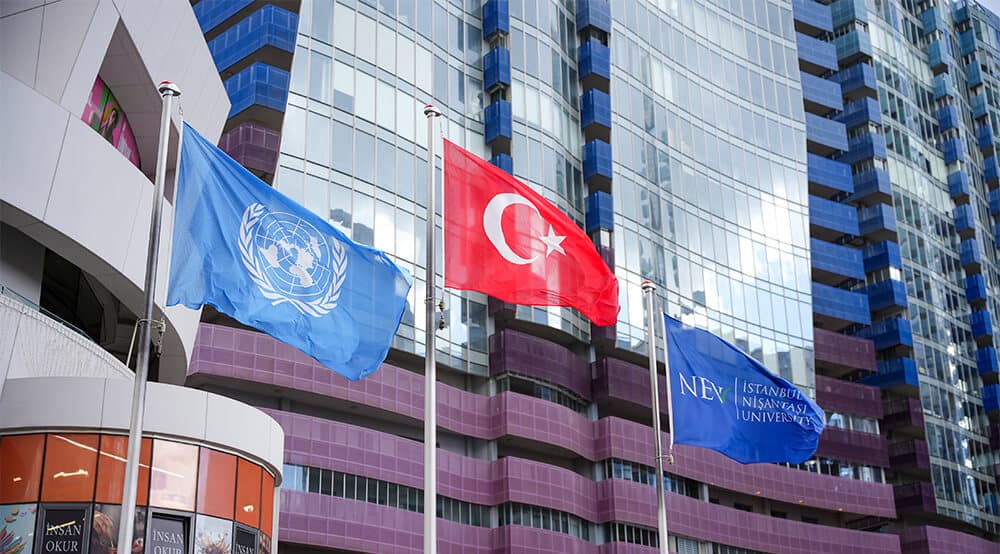
İstanbul Nişantaşı University was founded in 2009 with the aim of building an innovative and dynamic structure in the field of higher education, and gained foundation university status in 2012, thereby expanding its education and training activities. In the period from its establishment to the present day, it has become an institution that increases academic diversity, strengthens its research and development capacity, pioneers digital transformation, and adopts contributing to society as a fundamental goal.
012009–2012
Foundation and Early Period
İstanbul Nişantaşı University was founded by the Nişantaşı Education Foundation under the name “Nişantaşı Vocational School” and became official with the establishment decision dated 09.09.2009 and numbered 24480. With the decision published in the Official Gazette on 17.09.2009, it became part of the higher education system. In the 2010-2011 academic year, it admitted its first students and began education and training in associate degree programmes.
022012
Transition to University Status and Academic Structuring
İstanbul Nişantaşı University gained foundation university status with Additional Article 146 published in the Official Gazette dated 31.05.2012 and numbered 28309. In this process, the Faculty of Economics, Administrative and Social Sciences, the Faculty of Engineering and Architecture, the Faculty of Art and Design, the Institute of Science and the Institute of Social Sciences formed their academic structure, and Nişantaşı Vocational School was integrated into the university's academic structure.
032010 →
Academic Expansion and Programme Openings
2010-2011
The University began education and training with 14 associate degree programmes.
2011-2012
The number of associate degree programmes rose to 19.
2012-2013
The number of associate degree programmes reached 28.
2013-2014
In addition to associate degree programmes, undergraduate education began;
- Faculty of Economics, Administrative and Social Sciences→13 bachelor's programmes
- Faculty of Engineering and Architecture→5 bachelor's programmes
- Faculty of Art and Design→5 bachelor's programmes, and education was provided in a total of 23 bachelor's programmes.
2014-2015
The number of bachelor's programmes rose to 30.
- Faculty of Economics, Administrative and Social Sciences→19 bachelor's programmes
- Faculty of Engineering and Architecture→5 bachelor's programmes
- Faculty of Art and Design→6 bachelor's programmes
- Total number of bachelor's programmes: 30
- The Psychology department, offering education in English for the first time, was opened.
2015-2016
The number of departments whose language of instruction is English rose to 4 (Psychology, New Media, International Relations, Architecture).
- Faculty of Economics, Administrative and Social Sciences→19 bachelor's programmes
- Faculty of Engineering and Architecture→5 bachelor's programmes
- Faculty of Art and Design→6 bachelor's programmes
- Total number of bachelor's programmes: 30
- The number of departments whose language of instruction is English rose to 4 (Psychology, New Media, International Relations, Architecture).
At our University, in addition to the programmes offered with English as the language of instruction, the curricula of programmes whose language of instruction is Turkish have also been structured to include comprehensive foreign language education. Within this framework, in order to increase our students' global competitiveness and to support their integration into the international job market after graduation, speaking, writing and professional English courses have been integrated into the curricula of programmes taught in Turkish. This practice aims to enable our students to integrate their foreign language skills into their academic and professional development, making language learning a natural part of the process. In this way, our graduates are raised as multilingual and culturally well-equipped individuals.
2016-2017
The total number of bachelor's programmes reached 44, and the number of English programmes was increased to 8 (Psychology, New Media, International Relations, Architecture, Aviation Management, Social Work, Interior Architecture, Civil Engineering)
- Faculty of Economics, Administrative and Social Sciences→25 bachelor's programmes
- Faculty of Engineering and Architecture→10 bachelor's programmes
- Faculty of Art and Design→9 bachelor's programmes
- Total number of bachelor's programmes: 44
- The number of departments whose language of instruction is English was increased to 8 (Psychology, New Media, International Relations, Architecture, Aviation Management, Social Work, Interior Architecture, Civil Engineering).
2017-2018
The number of bachelor's programmes was maintained at 44, and the number of English programmes is 8.
- Faculty of Economics, Administrative and Social Sciences→25 bachelor's programmes
- Faculty of Engineering and Architecture→10 bachelor's programmes
- Faculty of Art and Design→9 bachelor's programmes
- Total number of bachelor's programmes: 44
- Departments whose language of instruction is English: 8
2018-2019
The number of bachelor's programmes was maintained at 44.
- Faculty of Economics, Administrative and Social Sciences→25 bachelor's programmes
- Faculty of Engineering and Architecture→10 bachelor's programmes
- Faculty of Art and Design→9 bachelor's programmes
- Education was provided in a total of 44 bachelor's programmes.
2019-2020
The Faculty of Health Sciences and the School of Physical Education and Sports were established, and the number of English programmes rose to 12.
New faculties and schools were opened:
- Faculty of Health Sciences
- School of Physical Education and Sports
New bachelor's programmes were opened:
- Faculty of Economics, Administrative and Social Sciences→3 new departments
- Faculty of Engineering and Architecture→2 new departments
- Faculty of Health Sciences→2 new departments
- School of Physical Education and Sports→1 new department
- Vocational School→1 new programme
- Departments whose language of instruction is English: 12 (Software Engineering in English, English Language and Literature, Translation and Interpreting, Business Administration in English)
2020-2021
The Conservatory and the School of Civil Aviation were established, and the number of departments offering education in English rose to 14 (Pilotage in English, Management Information Systems in English).
New faculties and schools were opened:
- Conservatory
- School of Civil Aviation
New bachelor's programmes were opened:
- Faculty of Economics, Administrative and Social Sciences→1 new department
- Faculty of Engineering and Architecture→2 new departments
- Faculty of Health Sciences→2 new departments
- Faculty of Art and Design→2 new departments
- Conservatory→2 new programmes
- School of Civil Aviation→3 new programmes
- Vocational School→1 new programme
- Departments whose language of instruction is English: 14 (Pilotage in English, Management Information Systems in English)
2021-2022
The Faculty of Dentistry was opened, and the number of programmes offering education in English reached 16.
New faculties were opened:
- Faculty of Dentistry
New bachelor's programmes were opened:
- Faculty of Economics, Administrative and Social Sciences→1 new department
- Faculty of Engineering and Architecture→1 new department
- Faculty of Health Sciences→2 new departments
- Faculty of Art and Design→2 new departments
- Conservatory→2 new programmes
- School of Civil Aviation→3 new programmes
- Faculty of Dentistry→1 new programme
- Departments whose language of instruction is English: 16 (Electrical and Electronics Engineering in English, Dentistry in English
2023-2024
A total of 11 new programmes were opened within the Faculty of Economics, Administrative and Social Sciences (6) and the Vocational School (5).
2025-2026
A total of 12 new programmes were opened within the Faculty of Engineering and Architecture (1), the Faculty of Health Sciences (1), the School of Applied Sciences (3), the Vocational School of Health Services (2) and the Vocational School (5).
042013 →
Development of Graduate Programmes and Increase in Academic Diversity
İstanbul Nişantaşı University has diversified its graduate programmes in line with the needs of developing sectors and academic research priorities in order to raise individuals capable of adapting to global dynamics. The master's programmes with and without thesis, doctoral programmes and distance learning programmes opened since 2013 aim to train graduates equipped to compete on both a national and an international scale.
Our graduate programmes have been designed to adopt an interdisciplinary approach and to adapt to sectoral demands, and have been structured in accordance with national and international academic standards. Our University, by offering flexible learning options to its students, is expanding distance learning and English-language programmes, and is integrating digitalisation and innovative learning methods into the academic process.
In this direction, İstanbul Nişantaşı University aims to achieve the following goals within the framework of YÖKAK's quality assurance system:
- To increase academic diversity with interdisciplinary and sector-focused programmes
- To expand English and distance learning options in order to increase global competitiveness
- To adopt digitalisation and innovative learning methods in higher education
- To develop national and international collaborations in order to increase the research capacity of graduate students
In this context, our University's graduate programme portfolio is continuously renewed and expanded in line with current scientific and sectoral developments. Below, the development over the years of İstanbul Nişantaşı University's graduate programmes, which include master's with and without thesis, doctoral and distance learning options, is detailed:
2013-2014
The first graduate programmes were opened.
- Business Administration (with thesis)
- Psychology (with thesis)
- Textile and Fashion Design (with thesis)
2014-2015
In addition to the existing programmes, new programmes with and without thesis were opened.
- Business Administration (with thesis)
- Textile and Fashion Design (without thesis)
- International Financial Reporting and Auditing (without thesis)
2015-2016
The first programme at doctoral level was opened.
- Business Administration (PhD)
New programmes were added in the field of health management:
- Health Management (with and without thesis)
2016-2017
Expansion was achieved in the fields of Human Resources and Social Sciences.
- Human Resources Management (with and without thesis)
- Political Science and International Relations (with and without thesis)
2020-2021
In parallel with sectoral developments, programmes were opened in the fields of gastronomy, sports and media.
- Gastronomy and Culinary Arts (with and without thesis)
- Movement and Training Sciences (with and without thesis)
- Civil Engineering (with and without thesis)
- Clinical Psychology (with thesis)
- Advertising and Brand Communication (with and without thesis)
- Sports Management (with and without thesis)
- International Trade and Finance (without thesis)
- New Media and Journalism (without thesis)
- A distance learning option was added: the Business Administration (without thesis) programme began to be offered through distance learning.
2021-2022
Graduate programmes in the fields of technology and engineering were increased.
- Artificial Intelligence Engineering (with and without thesis)
- Biotechnology (with thesis)
- Big Data Analytics and Management (with and without thesis)
- Finance and Banking (with and without thesis)
- Business Administration (with and without thesis)
- Chiropractic (with thesis)
- Architectural Design (with and without thesis)
- Accounting and Auditing (with and without thesis)
- Engineering Management (with and without thesis)
- Radio, Television and Cinema (with and without thesis)
- International Business (with and without thesis)
- The distance learning option was expanded: International Business (without thesis) began to be offered through distance learning.
Graduate programmes taught in English were opened:
- Business Administration (English) (without thesis)
- Political Science and International Relations (English) (PhD)
2022-2023
New programmes were opened in the fields of health, information technology and art.
- Clinical Psychology (without thesis)
- Accounting and Auditing (without thesis)
- Music and Performing Arts (with and without thesis)
- Advertising and Brand Communication (without thesis)
- Nutrition and Dietetics (with and without thesis)
- Computer Engineering (with and without thesis)
- International Business (with and without thesis)
- The distance learning option was expanded: the Political Science and International Relations (without thesis) programme was offered through distance learning.
2023-2024
Doctoral programmes were increased.
- Finance and Banking (PhD)
- Movement and Training Sciences (PhD)
- Business Administration (PhD)
Programmes were opened in the fields of strategic marketing and management:
- Strategic Marketing and Brand Management (with and without thesis)
- Local Governments (with thesis)
- Political Science (with and without thesis)
2024-2025
As part of the internationalisation process, English-language programmes were increased.
- International Relations (English) (with and without thesis)
2025-2026
A total of 8 new programmes were opened within the graduate school.
- Economics (MA) (with thesis)
- Entrepreneurship and Innovation Management (MA) (with thesis)
- Entrepreneurship and Innovation Management (MA) (without thesis) (English)
- Political Science and Public Administration (MA) (with thesis)
- Tourism Management (MA) (with thesis)
- Tourism Management (MA) (without thesis)
- New Media and Journalism (MA) (with thesis)
- New Media and Journalism (MA) (without thesis) (English)
İstanbul Nişantaşı University has continued its growth since its establishment by increasing its academic diversity, developing innovative education models and aiming for internationalisation. In particular, approaches focused on digital transformation, sustainability and entrepreneurship have shaped the University's education and training processes.
In this direction, the University's academic development and institutional transformation process have shaped its mission, vision and core values. The University's fundamental principles have been formed by taking into account the strategic decisions in its historical development process and the points it aims to reach in the future.